

Satsang Farm Curacaví, Chile: Highlighting the Reforestation of Native Species using MicroBiHoma and Agnihotra Ash

In 2025, the Reforestation program “Honey-Producing Flora to Improve the Sustainability of the Beekeeping Business in the Metropolitan Region” began in Chile. The project was implemented by the Chilean Forestry Institute (INFOR), a private-law corporation under the Ministry of Agriculture, and funded by the Regional Government of the Metropolitan Region. As a member of the Curacaví Organic Producers and owner of the Satsang farm in Curacaví, I was selected as one of the 32 beneficiaries of this reforestation program using native honey-producing species.
In general, the reforestation carried out by INFOR on all selected properties involved planting native trees using Basacote Plus (chemical fertilizer) as fertilizer and gel beads to retain water.
In the case of Satsang, I requested NOT to use these chemical products, but only Homa Efficient Microbiology for Native Forest (MicroBiHoma), which we produce on the farm, and Agnihotra Ash, to help restore the memory and vitality of the soil.
Planting Timeline
The planting holes, approximately 60 cm deep, were dug in June 2025 using the Miyawaki method. This method, developed by Japanese botanist Akira Miyawaki, creates dense, biodiverse native forests by mimicking natural ecosystems. In small spaces, various native species are planted, promoting rapid growth with minimal maintenance after the first two years.
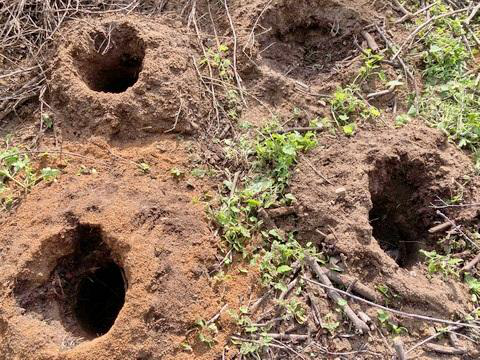
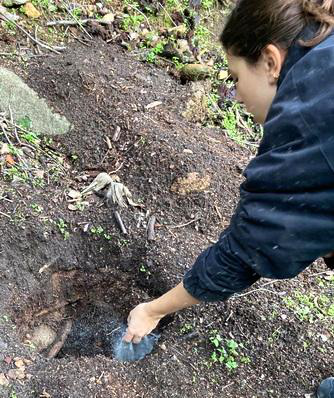
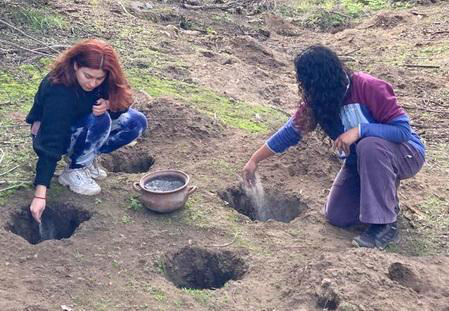
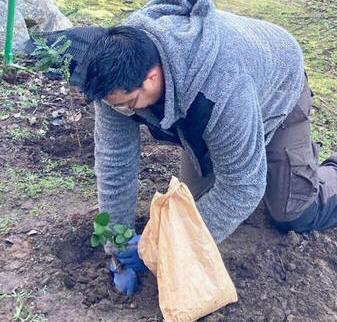
On August 8 and the following days, the native honey-producing trees were planted. The saplings brought by the INFOR team were very small, bare-rooted—they had grown in nurseries—and generally did not exceed 20 cm in height. The first ones planted were some that had been left over from another planting and had had their roots exposed for many days.
The holes they had previously dug had to be refilled because the seedlings were so small. When refilling the holes, we added solid MicroBiHoma—an Homa-based native forest microbial bio-stimulant that we produce here on the Satsang farm—to the soil at a rate of approximately 1 tablespoon per hole.
In addition, before planting the seedlings, they covered their roots with Agnihotra Ash.
I am deeply grateful to the professionals on the team assigned by the Chilean Forestry Institute, who were very flexible and respectful in following all the instructions I provided.
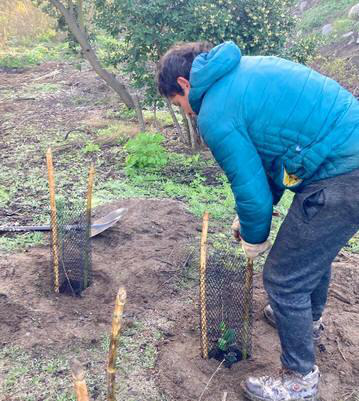
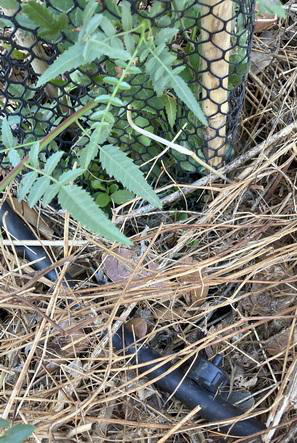
On October 29, the directors of the Chilean Forestry Institute’s reforestation program paid a technical visit to the plot. During the visit, the forestry engineers were surprised by the existing forest at Satsang, the size of the leaves on some Boldos (an endemic medicinal tree of Chile), and the Tata, a century-old Quillay tree. In addition, they saw firsthand how we produce MicroBiHoma and apply Homa agricultural technology. The director of the reforestation program attributed the remarkable condition of the forest on the farm to the practices we employ and expressed interest in conducting further research.
On November 5, 2025, we performed the first drip irrigation, and starting on November 17, we began watering twice a week. On November 21, we applied liquid MicroBiHoma to 50 saplings located in the driest part of the plot.
On December 7 and again on January 5, we added a handful of Agnihotra Ash around the saplings. In addition, in January and February, we placed layers of grass, weeds, and vegetable leaves that we removed from the garden to protect the soil around the saplings and to ensure that the rabbits ate those leaves instead of the saplings.
On the afternoon of March 2, we buried one tablespoon of solid MicroBiHoma per sapling, near each dripper.
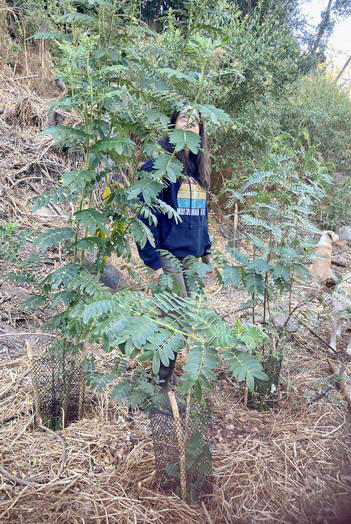
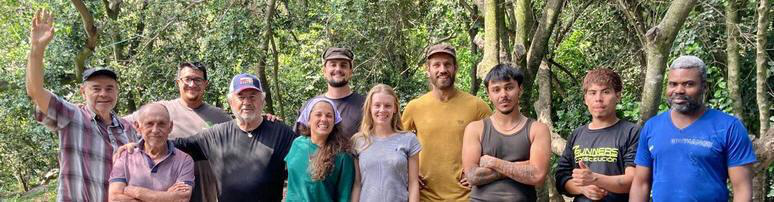
Given the excellent results that the forestry engineers observed in the reforestation project using Homa technology in Satsang, they asked us to organize a demonstration field day on the site, which took place on April 7.
On this occasion, in addition to executives and professionals from the Forestry Institute, other program beneficiaries participated, and they were surprised by the height of the native species planted in Satsang.
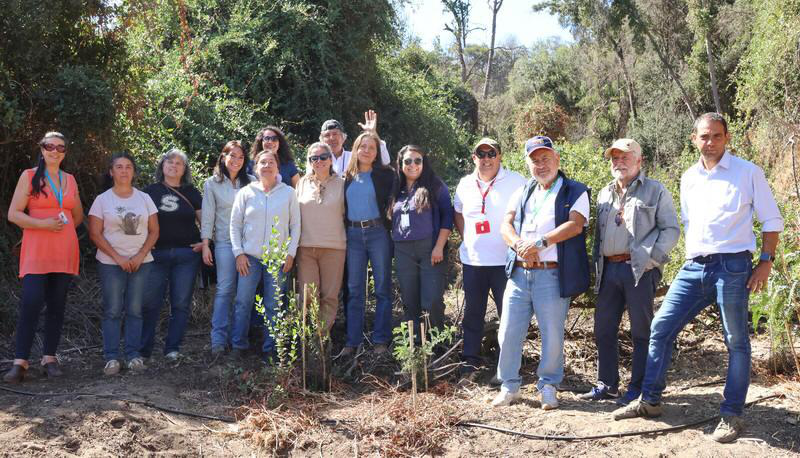
Following this event, invitations have emerged to continue research and participate in conferences to present the reforestation experience in Satsang, using MicroBiHoma and Agnihotra Ash.
An experience that I hope will help people understand the importance of caring for and restoring the life and memory of the soil, promoting agroecological agricultural and forestry practices that include, among other things, the incorporation of locally produced Homa Efficient Microbiology from Native Forests, tailored to the original forest of each area.
Furthermore, I believe it is essential to add a factor that is often forgotten or overlooked, because modern agriculture lacks the answers on how to achieve it: the importance of restoring and nourishing the atmosphere. To quote Bruce Johnson, approximately 70% of plant nutrition comes from the atmosphere. Therefore, nourishing and restoring it is essential for trees and plants to grow strong and healthy. That is why I believe it is so important to include the daily practice of Agnihotra in reforestation and ecosystem restoration programs; so that, in addition to reviving the soil, we can restore life as a whole.
From HOMA HEALTH Newsletter #241, 13th May 2026 — www.terapiahoma.com · www.homa1.com · www.homatherapy.info