Homa Farming — The Solution for the Future of Our Planet!

Satsang Farm Curacaví, Chile: Highlighting the Reforestation of Native Species using MicroBiHoma and Agnihotra Ash

Karina Ohme
Karina Ohme

In 2025, the Reforestation program “Honey-Producing Flora to Improve the Sustainability of the Beekeeping Business in the Metropolitan Region” began in Chile. The project was implemented by the Chilean Forestry Institute (INFOR), a private-law corporation under the Ministry of Agriculture, and funded by the Regional Government of the Metropolitan Region. As a member of the Curacaví Organic Producers and owner of the Satsang farm in Curacaví, I was selected as one of the 32 beneficiaries of this reforestation program using native honey-producing species.

In general, the reforestation carried out by INFOR on all selected properties involved planting native trees using Basacote Plus (chemical fertilizer) as fertilizer and gel beads to retain water.

In the case of Satsang, I requested NOT to use these chemical products, but only Homa Efficient Microbiology for Native Forest (MicroBiHoma), which we produce on the farm, and Agnihotra Ash, to help restore the memory and vitality of the soil.

Planting Timeline

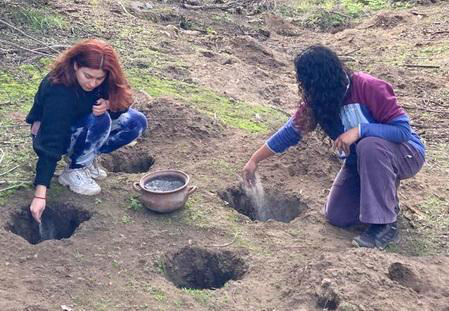
The planting holes, approximately 60 cm deep, were dug in June 2025 using the Miyawaki method. This method, developed by Japanese botanist Akira Miyawaki, creates dense, biodiverse native forests by mimicking natural ecosystems. In small spaces, various native species are planted, promoting rapid growth with minimal maintenance after the first two years.
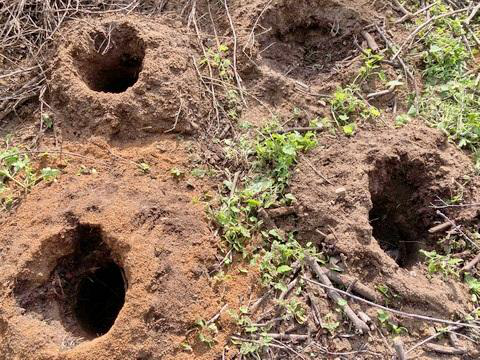
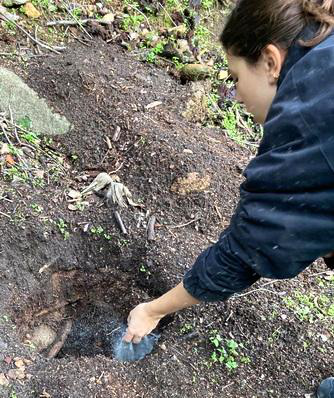
Photo 1: The planting holes, dug using the Miyawaki method.
Photo 2: The first application of Agnihotra ash inside the holes took place on June 21, 2025, with approximately one handful of Agnihotra Ash applied to each hole.
Photo 3: The second application of Agnihotra Ash inside the holes took place on July 27, 2025. To ensure that all holes contained Agnihotra ash, a handful was applied to each one again.

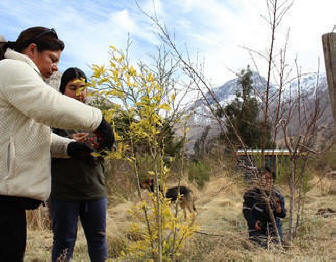
On August 8 and the following days, the native honey-producing trees were planted. The saplings brought by the INFOR team were very small, bare-rooted—they had grown in nurseries—and generally did not exceed 20 cm in height. The first ones planted were some that had been left over from another planting and had had their roots exposed for many days.

The holes they had previously dug had to be refilled because the seedlings were so small. When refilling the holes, we added solid MicroBiHoma—an Homa-based native forest microbial bio-stimulant that we produce here on the Satsang farm—to the soil at a rate of approximately 1 tablespoon per hole.

In addition, before planting the seedlings, they covered their roots with Agnihotra Ash.

I am deeply grateful to the professionals on the team assigned by the Chilean Forestry Institute, who were very flexible and respectful in following all the instructions I provided.
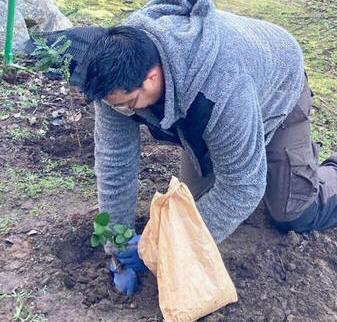
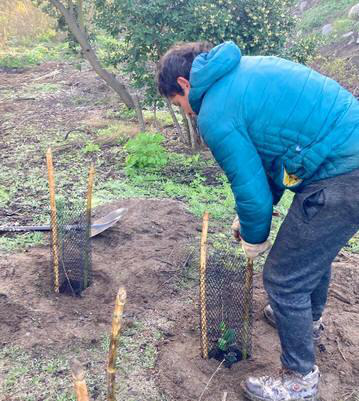
Photo 4: Planting the native honey-producing saplings.
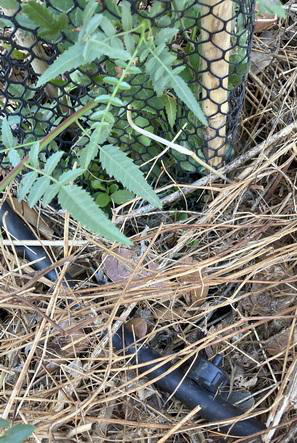
Photo 5: Once planted, the saplings were protected with plastic netting and coligüe sticks, specifically to keep rabbits away. In total, 340 native honey-producing species from Chile’s sclerophyllous forest were planted.
Photo 6: On October 27, as summer and the heat were already setting in in Chile, the drip irrigation system was installed. In the central region, we can experience extremely dry summers, with 7 to 8 months without rain.

On October 29, the directors of the Chilean Forestry Institute’s reforestation program paid a technical visit to the plot. During the visit, the forestry engineers were surprised by the existing forest at Satsang, the size of the leaves on some Boldos (an endemic medicinal tree of Chile), and the Tata, a century-old Quillay tree. In addition, they saw firsthand how we produce MicroBiHoma and apply Homa agricultural technology. The director of the reforestation program attributed the remarkable condition of the forest on the farm to the practices we employ and expressed interest in conducting further research.
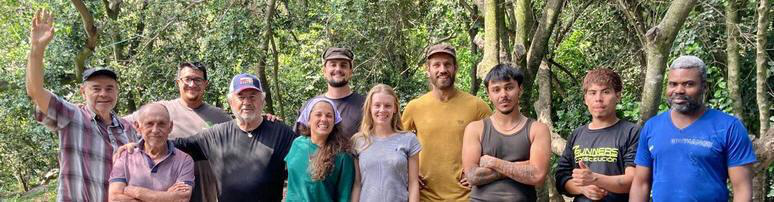
Photo 7: With the team of the Chilean Forestry Institute at Satsang farm.

On November 5, 2025, we performed the first drip irrigation, and starting on November 17, we began watering twice a week. On November 21, we applied liquid MicroBiHoma to 50 saplings located in the driest part of the plot.

On December 7 and again on January 5, we added a handful of Agnihotra Ash around the saplings. In addition, in January and February, we placed layers of grass, weeds, and vegetable leaves that we removed from the garden to protect the soil around the saplings and to ensure that the rabbits ate those leaves instead of the saplings.

On the afternoon of March 2, we buried one tablespoon of solid MicroBiHoma per sapling, near each dripper.
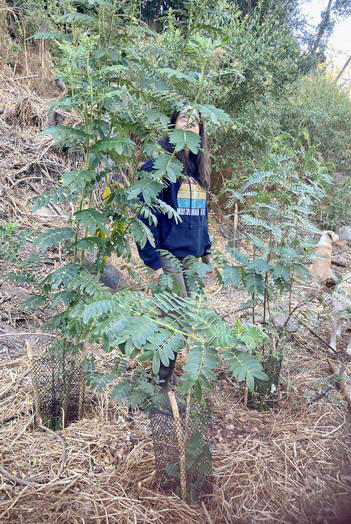
Photo 8: Height 2.20 m, April 2026.

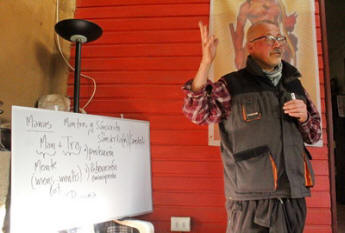
Given the excellent results that the forestry engineers observed in the reforestation project using Homa technology in Satsang, they asked us to organize a demonstration field day on the site, which took place on April 7.

On this occasion, in addition to executives and professionals from the Forestry Institute, other program beneficiaries participated, and they were surprised by the height of the native species planted in Satsang.
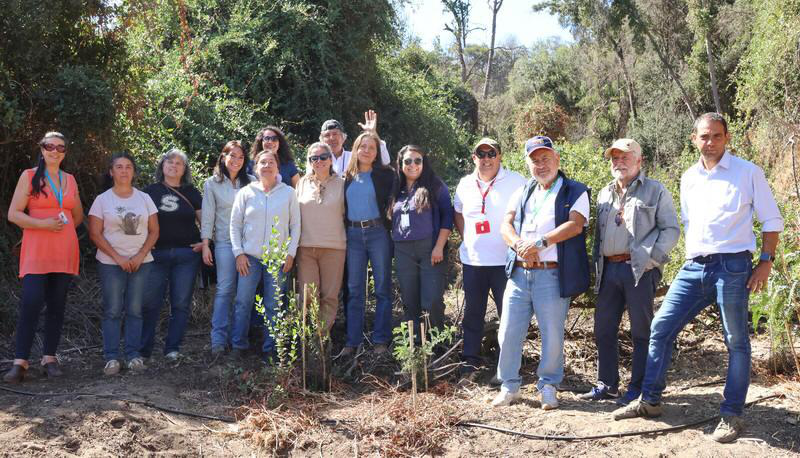
Photo 9: Demonstration field day at Satsang, April 7, 2026.

Following this event, invitations have emerged to continue research and participate in conferences to present the reforestation experience in Satsang, using MicroBiHoma and Agnihotra Ash.

An experience that I hope will help people understand the importance of caring for and restoring the life and memory of the soil, promoting agroecological agricultural and forestry practices that include, among other things, the incorporation of locally produced Homa Efficient Microbiology from Native Forests, tailored to the original forest of each area.

Furthermore, I believe it is essential to add a factor that is often forgotten or overlooked, because modern agriculture lacks the answers on how to achieve it: the importance of restoring and nourishing the atmosphere. To quote Bruce Johnson, approximately 70% of plant nutrition comes from the atmosphere. Therefore, nourishing and restoring it is essential for trees and plants to grow strong and healthy. That is why I believe it is so important to include the daily practice of Agnihotra in reforestation and ecosystem restoration programs; so that, in addition to reviving the soil, we can restore life as a whole.

From HOMA HEALTH Newsletter #241, 13th May 2026 — www.terapiahoma.com · www.homa1.com · www.homatherapy.info
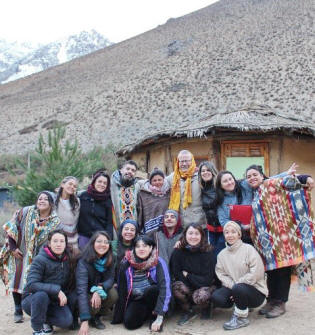

Visit of Agriculture Students to Bhargava Dham, Elqui Valley, Chile

Carolina Morales
Agronomist

During the month of August 2022, a volunteer program was offered to a group of students from the Technician in Ecological Agriculture career course. There were 14 people who participated for 3 days in Bhargava Dham, located in the Elqui Valley.

During the program there was outstanding support provided by
Carlos Bustamante and Milena
:
-Daily practice of Sunrise and Sunset Agnihotra
-Daily practice Gayatri Mantra at noon
-Pruning Fruit orchard: fig, pear, apricots trees.
-Application of compost and Agnihotra ash.
-Fivefold Path Workshop.
-Sanskrit and Mantras workshop.

In addition, the volunteer students enjoyed the Cochiguaz River and pursued relaxation and recreation activities.

The main objective of this visit was to EXPERIENCE the practice and discipline of Homa Therapy and its application in agriculture, through fun, participatory activities that allow the volunteer to personally and collectively experience the applicability of the effects of a Homa environment and in such an important energy point for the planet-
BHARGAVA DHAM

Applications of Homa Biosol on Horticulture Crops


 Photo: Effect of application of Homa Biosol on crop fruiting in Bhargava Dham, Elqui Valley

Agronomist
Carolina Morales Pavez,
Elqui Valley, Chile

Horticulture crops must be provided constantly with the necessary nutrition in order to facilitate both growth and development; that means so that it can generate its botanical structures such as the root, stem, leaf, flowers and fruition among others.

Continue reading “Applications of Homa Biosol on Horticulture Crops”

Agnihotra Ash Recharges Well Water During Drought


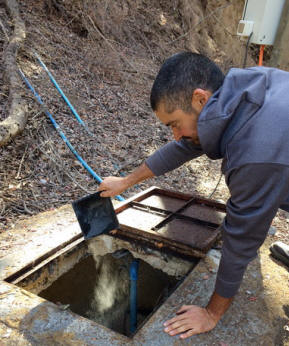
 Photo: Juan José Rodrigues began to go every day to the well to put Agnihotra ash in it.

Karina Ohme
Homa Farm ‘Satsang’
Curacavi, Chile, South America

Chile is facing the worst drought in its history. Radio Cooperativa, one of the country’s main news stations, warned of the catastrophic situation experienced because of the serious water crisis and agricultural emergency.
It added that according to Greenpeace, “Chile is the country with the greatest water crisis in the entire Western Hemisphere and 76 percent of its territory is affected by drought.”

Continue reading “Agnihotra Ash Recharges Well Water During Drought”

Fivefold Path Foundation of Chile Participates in the First Chilean Congress of Agroecology

With the conference "Scientific Experiences Applying Homa Ecological Agricultural Technology in the Great North of Chile" and the poster "Elaboration of the Methodology and use of the fertilizer & bio stimulant Gloria Biosol Homa as an agroecological and economic alternative for Organic Agriculture", the Fivefold Path Foundation Quintuple participated on October 17th and 18th, 2019 First Chilean Agroecology Congress held in Pucón, Chile. Continue reading “Fivefold Path Foundation of Chile Participates in the First Chilean Congress of Agroecology”

Volunteering at the Satsang Homa Farm, Curacavi, Chile

Juan Rodríguez and Karina Ohme, the Guardians of Satsang, a farm where Homa Therapy is practiced, wrote:

Building together an Ark of Love and Service
With each new volunteer who participates in Satsang, we feel that we are being revealed more and more our deepest purpose, as well as the relevance of creating these "Arks" through the world, spaces of re-encounter with Nature, with ourselves and with the sacred legacy of the Vedas, the Agnihotra. We are deeply grateful of the beautiful experiences we live with each volunteer, their teachings, learning, joys and friendship … Thank you! Continue reading “Volunteering at the Satsang Homa Farm, Curacavi, Chile”

Advances of Homa Farming in Satsang Farm, Curacavi, Chile

by Carolina Morales Pavez,
Agricultural Engineer

      The development of organic Homa farming in the Satsang farm,  located in Curacaví-Chile, has had important advances in respect to the agro-ecological design developed by Karina Ohme and Juan José Rodrigues.

      This involves aspects on biological adaptation of the agro-ecosystem through the establishment of a greater diversity of species, in addition to the functional and native flora, the medicinal and aromatic herbs and horticultural crops, important for food. Continue reading “Advances of Homa Farming in Satsang Farm, Curacavi, Chile”

Homa Ecological Farming Workshop at Technology Center For Sustainability, Santiago, Chile

 By Carolina Morales Pavez, Agricultural Engineer

       The Technological Center for Sustainability (CTS) invited the ‘Quintuple Sendero’ (Fivefold Path) Foundation to hold a workshop on Homa Ecological Farming, in its dependencies in the community Buin – situated in the Metropolitan Region. Continue reading “Homa Ecological Farming Workshop at Technology Center For Sustainability, Santiago, Chile”

Canchones Agricultural Experimental Station of Arturo Prat University, Iquique, Chile

 By Carolina Morales Pavez,
Agronomist

During the Spring-Summer season in 2006 – 2007 at the Canchones Experimental Station, belonging to the Arturo Prat University of Iquique-Chile, an experiment was carried out with the cultivation of melon (Cucumis melo, cultivar Arava), under two systems of cultivation: Homa Agriculture and Conventional Agriculture (use of agrochemicals). In this sector, the records under the conventional production system indicate that this crop takes between 5 to 6 months to be ready for harvesting and marketing.


Continue reading “Canchones Agricultural Experimental Station of Arturo Prat University, Iquique, Chile”

Irma Castillo, Region of Antofagasta, Chile, Receives Recognition from Agro-Ecological Symposium

Award for Development of Homa Ecological Agriculture in First Symposium for Family Agriculture

   
The Agricultural Development Institute (INDAP), of the Chilean Ministry of Agriculture
, organized on 6 and 7 September 2017, the 1st Symposium on Agro-ecology for Family Agriculture. Recognition was given for the creativity and effort to those small farmers and/or their organizations, which develop agro-ecological production systems in the country’s agricultural food sector. Continue reading “Irma Castillo, Region of Antofagasta, Chile, Receives Recognition from Agro-Ecological Symposium”